The Art of Breaking
There is a moment in every person's life where they hit the floor. Not metaphorically — an actual, physical reckoning where the world keeps moving and you stop. Mine came at 28 years old, in the middle of a work shift, when my body finally refused to carry what I had been asking it to carry for fourteen years.
I want to tell you what led me there. And I want to tell you what I found when I finally looked up.
The Life Before
I started working in hospitality as a teenager. Kitchens, restaurants, bars — the world that runs on adrenaline and closes at 4am. I loved the craft of it, the pace, the way a well-run evening could feel like conducting an orchestra. Watching people enjoy themselves — a great meal, a perfectly timed drink, friends laughing across a table — gave me something close to purpose.
But the industry has a shadow side, and I walked straight into it. The high-pressure culture, the late nights, the easy access to escape routes — I developed coping mechanisms that started casually and became consuming. What began as a way to manage stress in my mid-teens evolved, over the course of a decade, into patterns of dependency that I could not break on my own.
Then came the gambling. Casinos, sports betting, speculative markets — the cycle was always the same. Significant gains followed by devastating losses, repeated on a loop for over ten years. I have experienced the exhilaration of enormous wins and the hollow devastation of watching everything disappear. That whiplash warps your relationship with money, with risk, with reality itself.
Quietly, the people I cared about most let go. Relationships I had treasured slipped away — not through confrontation, but through the slow erosion of trust that comes from years of being unreliable, unavailable, and unable to show up. By my mid-twenties, I wasn't sure there was a self left to find.
A Photograph That Changed Everything
I was 25. Exhausted in a way that had nothing to do with sleep — the kind of fatigue that lives in your bones when you have been at war with yourself for too long.
I was scrolling through images on my phone, looking for something as simple as new wallpaper, when I found a photograph that stopped me completely: a ceramic bowl, shattered and repaired with gold. The cracks were not concealed. They were celebrated. The damage had become the most striking feature of the object.
I spent hours reading about what I was seeing. Kintsugi — "golden joinery" — is the centuries-old Japanese practice of repairing broken ceramics with lacquer mixed with gold, silver, or platinum. It is rooted in wabi-sabi, the philosophy that imperfection and impermanence are not flaws to be hidden but truths to be honoured. Where Western instinct is to restore an object to its original state as though the damage never happened, Kintsugi illuminates the break. It makes the repair part of the story.
"What if I am not ruined? What if I am just mid-repair?"
I need to be honest here, because I think false stories do more harm than silence. Discovering Kintsugi did not fix me. I did not encounter a philosophy at 25 and walk out of my old life. That is not how change works. I continued to struggle — the same patterns, the same gravity pulling me back — for years after that moment.
But what Kintsugi gave me was a reframe. Before it, I understood my history as proof of what I was: broken, beyond repair, unworthy of anything better. After it, something shifted. Falling was not failure. It was part of the repair. The gold does not appear instantly. The kintsugi artist works slowly, carefully, over time.
The Floor
At 28, two events broke me open in a way that could not be closed again.
My father had a serious cardiac event. He survived. But standing in that hospital, looking at the man who raised me, I felt the full weight of what I had been doing — not just to myself, but to the people who loved me. Every morning I woke up was time I was spending recklessly.
Weeks later, my own health failed. I collapsed at work. Everything I had been running on — the adrenaline, the coping mechanisms, the pace of a life lived at full intensity for over a decade — it stopped. And in the stillness that followed, beneath everything I had been using to avoid it, I heard something clearly for the first time:
"I want to live."
Not to escape. Not to feel different. I wanted to be present, healthy, and whole. I wanted to become the version of myself that the people who loved me had never had the chance to see.
That was the break that became the repair.
What Kintsugi Actually Teaches Us
The break is not the end of the story. We are uncomfortable with damage. We are ashamed of our cracks. Kintsugi says: show the break. Honour it. The history of what you survived is what makes you irreplaceable.
Repair is not restoration. You cannot undo what happened. You cannot return to who you were before. But you can become something new — something that carries the damage forward, transformed into gold.
Imperfection is universal. Every life carries cracks. The colleague who seems to have everything together, the friend who always looks composed — they are all mid-repair. They are all carrying something. The moment I understood this, I stopped feeling uniquely failed. I was not an exception to the human experience. I was a member of it.
How to Carry This Forward
Stop hiding the cracks. The energy you spend concealing your struggles is energy you could spend repairing them. Shame closes. Honesty opens.
Measure differently. We measure our lives by what we have achieved. Kintsugi offers another measure: what have you survived? What have you repaired, slowly, imperfectly, over time? Those things have value too.
Accept the in-between. Recovery, growth, change — none of it is linear. You will fall between now and the person you are becoming. That is not failure. That is the process.
Look for the gold in your history. Everything I went through is in the work I do now. KintsugiBo is built from those years. Nothing is wasted if you let it become part of what you are making.
Why I Built KintsugiBo
I returned to the Kintsugi philosophy at 28 and I built something from it. Not because I had fully healed — I was still in the process. But because I understood that the work itself was part of the repair.
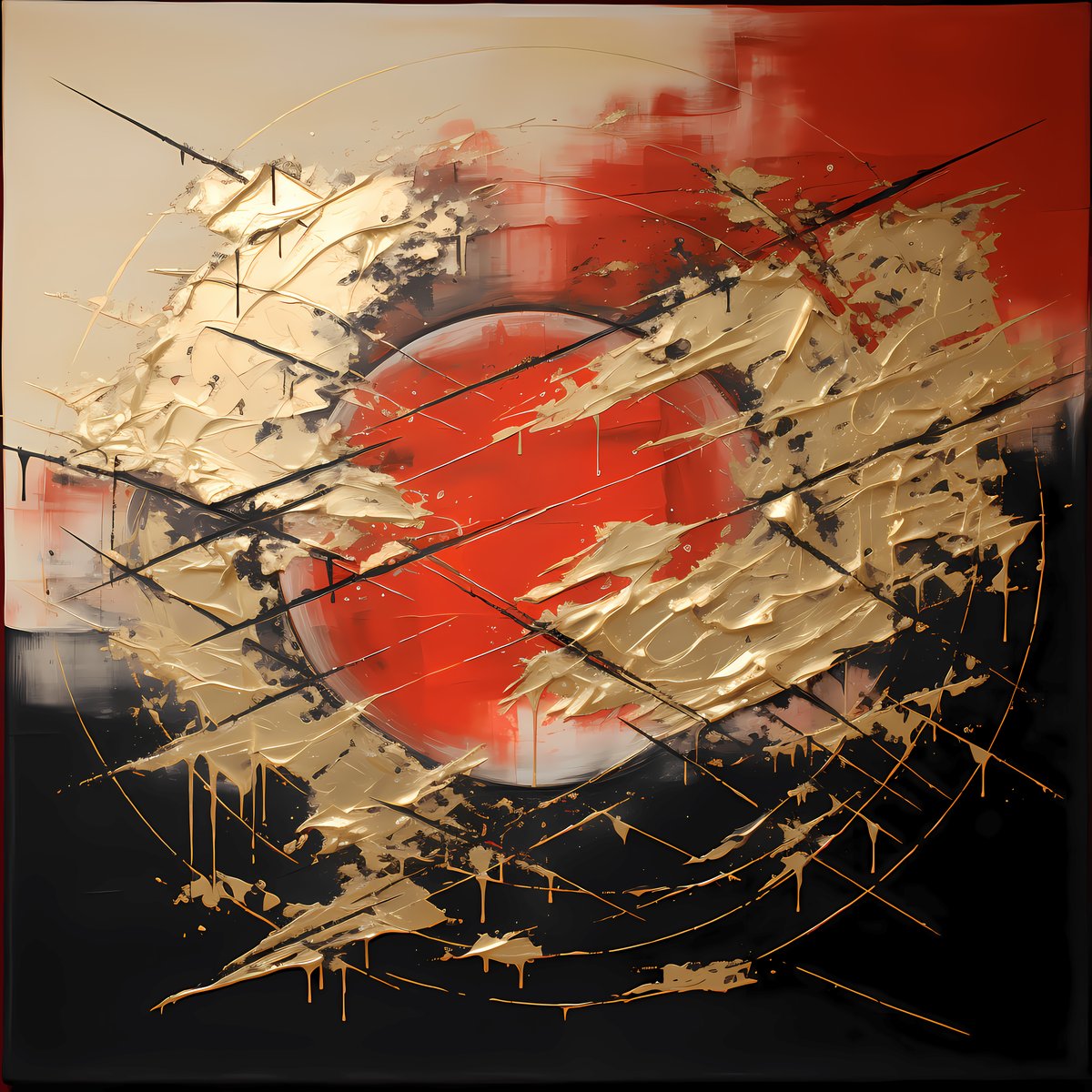
Every artwork in the KintsugiBo collection is an expression of this belief. The golden fractures, the dark textures, the light that seems to emerge from inside the breaks — these are not decorative choices. They are a philosophy made visible. A reminder, hung on a wall, that what has broken can become the most beautiful thing about us.
I built this for myself first. And then I built it for you.
You Are Not Ruined
If you have read this far, I think you might be carrying something. Maybe something you haven't said out loud. Maybe a crack you have been keeping hidden so long it has started to feel like the truth of who you are.
I want to tell you, from the other side of that feeling:
"You are not ruined. You are mid-repair."
The gold is coming. It takes time. It takes falling, and getting up, and falling again. It takes honesty that is terrifying and patience with yourself that feels impossible. But it comes.
Imperfection is not your flaw. It is your humanity. And your humanity — all of it, the breaking and the repairing and the gold-filled cracks — is more beautiful than you know.
— Sammuel, Founder of KintsugiBo Bochum, Germany
If this story resonated with you, share it with someone who needs it.
Written by
Sammuel
Celebrating imperfection through Kintsugi-inspired art.