The Art of Kintsugi: Finding Beauty in Broken Things
A Crack in the Bowl, a Crack in Perfection
In 15th-century Japan, the story goes that shogun Ashikaga Yoshimasa sent a cracked Chinese tea bowl back to China for repair. When it returned, held together with ugly metal staples, he was deeply disappointed. Japanese craftsmen, seeking something more beautiful, developed a radical alternative: they repaired the bowl with lacquer mixed with powdered gold.
The result was not a hidden repair. It was a transformation. The golden seams made the bowl more valuable, more beautiful, and more meaningful than it had ever been before its breaking.
This was the birth of Kintsugi — the art of golden repair.
More Than a Technique
Kintsugi is often described as an art form, but it is more accurately a philosophy. It belongs to a broader Japanese aesthetic tradition that includes:
- Wabi-sabi — finding beauty in imperfection and impermanence
- Musubi — the concept of connection and repair
- Ma — the meaningful space between things
Where Western culture often treats damage as diminishment, Kintsugi treats it as enrichment. The crack is not a flaw to be erased — it is a story to be told. The gold does not hide the break; it celebrates it.
The Process
Traditional Kintsugi is a painstaking process that can take weeks or even months:
- Assessment — The broken pieces are carefully examined and fitted together
- Bonding — Urushi lacquer (from the sap of the lacquer tree) is used to join the fragments
- Dusting — While the lacquer is still tacky, gold, silver, or platinum powder is applied
- Curing — The piece is left to cure in a humid environment for several weeks
- Polishing — The golden seams are gently polished to a luminous finish
The result is a vessel that wears its history openly — each golden line a testament to what it has survived.
Why Kintsugi Matters Today
In an age of mass production and disposability, Kintsugi offers a radical counter-narrative. It tells us that:
- Damage is not the end of value — it can be the beginning of greater beauty
- History should be visible — not concealed or denied
- Repair is an act of art — not just maintenance
- Imperfection is human — and deeply beautiful
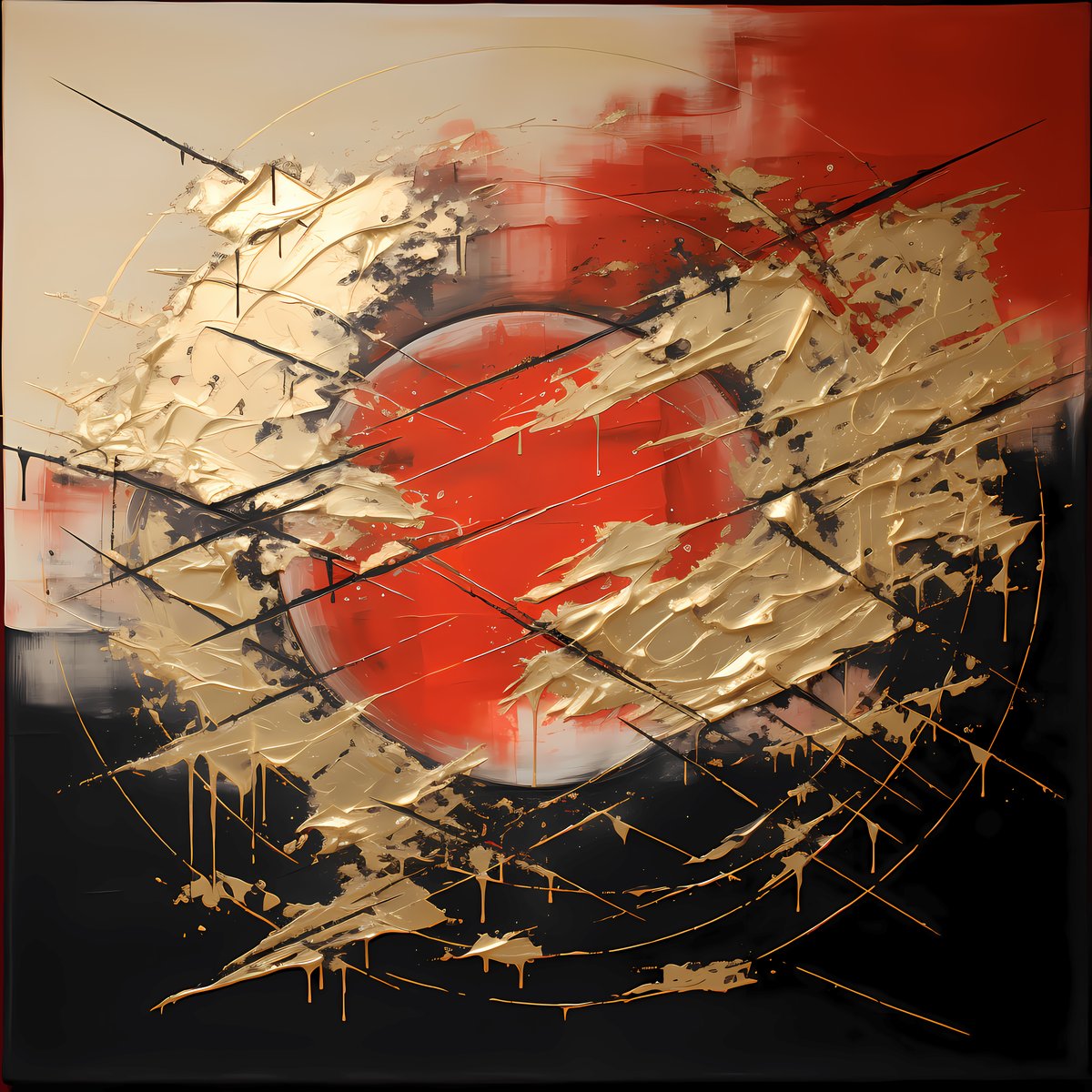
At KintsugiBo, we carry this philosophy into every piece we create. Our artwork doesn't depict traditional repaired pottery — instead, it captures the feeling of Kintsugi: the tension between fracture and wholeness, the luminous gold that appears wherever things have broken and been made new.
Living with Kintsugi
You don't need a broken bowl to practice the Kintsugi philosophy. It lives in how you see the world:
In the stretch marks that map a body's changes. In the laugh lines earned over decades. In the friendships rebuilt after misunderstanding. In the career that changed direction after failure.
Every crack is where the gold gets in.
Explore our collection of Kintsugi-inspired artwork and bring this ancient philosophy into your home.
Geschrieben von
KintsugiBo
Wir feiern die Unvollkommenheit durch Kintsugi-inspirierte Kunst.