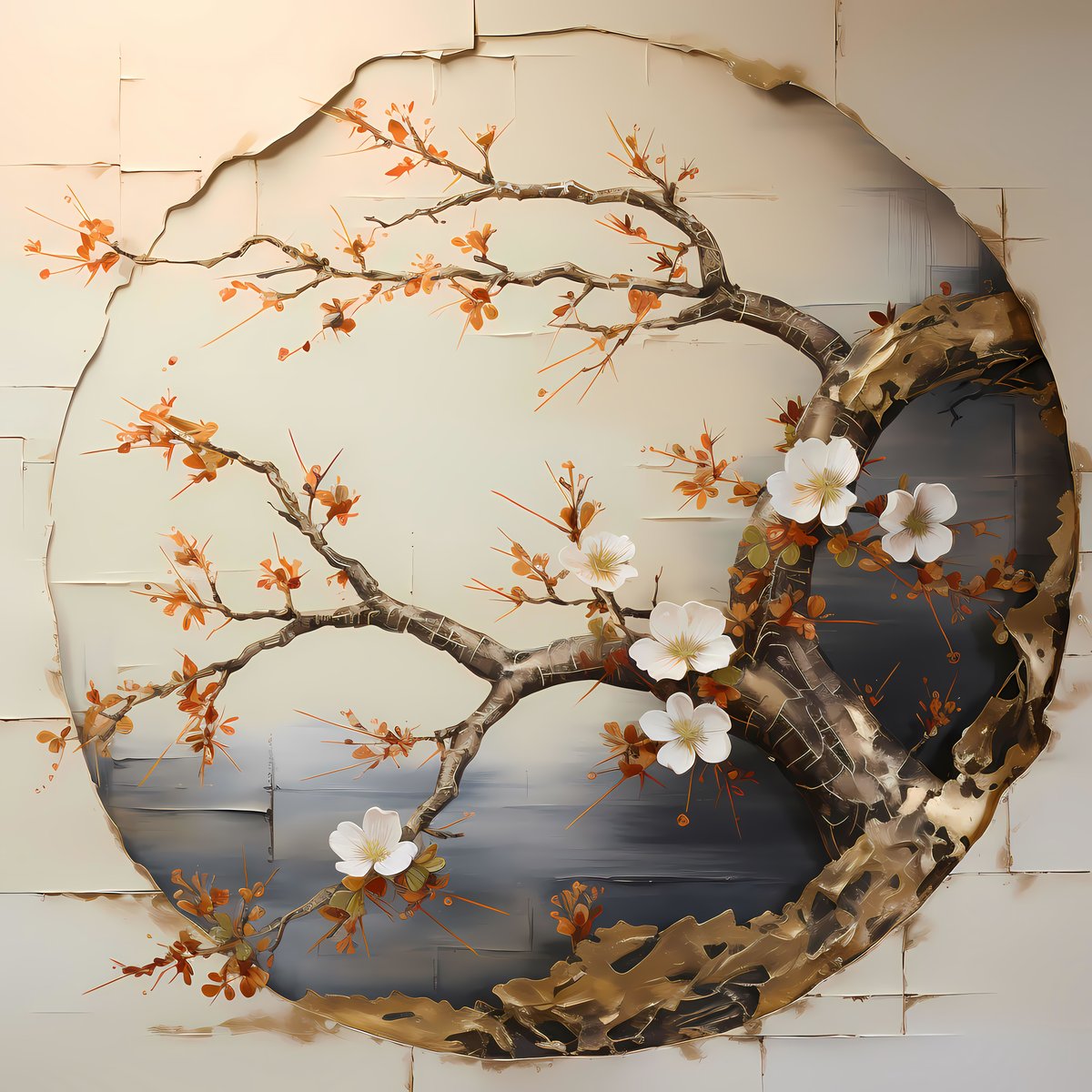
Wabi-Sabi and Kintsugi: The Japanese Aesthetics That Changed How We See Beauty
Two Words That Changed Everything
There are moments when a single idea reshapes how you see the world. For many of us, that moment came through two Japanese words: wabi-sabi and Kintsugi. One teaches you how to see. The other teaches you what to do with what you've seen. Together, they form a philosophy of beauty that feels almost revolutionary in a world addicted to perfection.
These are not obscure academic concepts. They are alive — in the homes we build, the objects we cherish, and the way we choose to live. And once you understand them, you can't unsee what they reveal.
Wabi-Sabi: The Beauty of What Fades
Wabi-sabi is often translated as "the beauty of imperfection," but that barely scratches the surface. It is rooted in three Buddhist principles: impermanence (mujo), suffering (ku), and emptiness (ku). From these, wabi-sabi draws a startling conclusion: the most beautiful things in the world are incomplete, impermanent, and imperfect.
Wabi originally meant the loneliness of living in nature, away from society. Over centuries, it evolved to describe a rustic simplicity — the beauty of a handmade tea bowl with an uneven rim, a weathered wooden fence, frost on bare branches.
Sabi refers to the beauty that comes with age — the patina on copper, the moss on stone, the gentle warping of a wooden shelf that has held books for decades.
Together, wabi-sabi asks us to slow down. To notice what most people overlook. To find more beauty in a cracked clay cup than in a flawless porcelain one — because the cracked cup has lived.
In practice, wabi-sabi shows up as an appreciation for:
- Natural materials that age and change over time
- Asymmetry and organic forms over geometric precision
- Simplicity that reveals depth rather than hides emptiness
- The marks of time — wear, weathering, and patina as evidence of a life fully used
Kintsugi: The Art of Making It Golden
If wabi-sabi is the philosophy of seeing, Kintsugi is the philosophy of doing. Where wabi-sabi notices the crack, Kintsugi fills it with gold.
The practice emerged in 15th-century Japan when broken pottery was repaired with lacquer mixed with powdered gold, silver, or platinum. Rather than disguising the damage, the golden seams transformed it into a feature — making the repaired object more valuable and more beautiful than it had been before.
Kintsugi embodies a set of beliefs that run counter to nearly everything modern culture tells us:
- Breakage is not the end — it is a new beginning
- Scars are not shameful — they are evidence of survival
- Repair is creative — it is an act of art, not maintenance
- History should be visible — concealment is a kind of dishonesty
Where wabi-sabi accepts imperfection passively, Kintsugi engages with it actively. It picks up the broken pieces and does something extraordinary with them. It doesn't merely tolerate the damage — it makes the damage luminous.
The Seeing and the Doing
This is the relationship that makes these two philosophies so powerful together. Wabi-sabi gives you the eyes. Kintsugi gives you the hands.
Wabi-sabi teaches you to look at a cracked wall and see character instead of disrepair. Kintsugi takes that same crack and runs gold through it. One is a way of perceiving the world; the other is a way of responding to it.
In Japanese tea ceremony — where both philosophies find their fullest expression — the host might serve tea in a Kintsugi-repaired bowl. The guests, trained in wabi-sabi sensibility, would appreciate not just the beauty of the golden repair, but the entire story it tells: the bowl's original creation, its moment of breaking, and its transformation into something new. The imperfect, impermanent, incomplete bowl becomes the most treasured object in the room.
These Philosophies in Modern Life
You don't need to practice tea ceremony to live by these ideas. Wabi-sabi and Kintsugi are showing up everywhere in contemporary design and culture:
In interiors — The movement toward natural materials, handmade ceramics, and lived-in textures reflects wabi-sabi's influence. Perfectly styled rooms are giving way to spaces that feel honest and inhabited. The most compelling rooms we see today aren't showroom-perfect — they're layered with objects that have stories.
In wellness — The language of "golden repair" has entered therapy, self-help, and mindfulness practice. The idea that our scars can become our most beautiful feature resonates deeply in a culture slowly learning to be honest about struggle.
In art — This is where we find our own expression. At KintsugiBo, every piece we create lives at the intersection of wabi-sabi and Kintsugi. Our Golden Scars embodies this perfectly — golden light tracing through darkness, each fracture line visible and celebrated rather than concealed. Similarly, Gilded Fractures reduces the philosophy to its purest form: a single luminous crack splitting the dark, minimal and absolute in its beauty.
These pieces don't just depict the philosophy — they make you feel it. When you live with art that celebrates imperfection, the philosophy seeps into how you see everything else.
Why Now?
There is a reason these centuries-old Japanese ideas are resonating so deeply right now. We are living through an era of relentless optimization — of filters, algorithms, and curated perfection. Every surface is smoothed. Every flaw is edited out. And yet, paradoxically, we have never felt more anxious, more inadequate, more aware that the perfection we're chasing doesn't exist.
Wabi-sabi and Kintsugi offer an exit from that cycle. They don't ask you to try harder or do better. They ask you to see differently. To recognize that the weathered, the worn, the cracked, and the repaired are not less beautiful — they are more beautiful, because they are real.
The moss grows. The lacquer cures. The gold catches the light.
And somewhere in the imperfection, you find something perfect after all.
Explore Golden Scars and Gilded Fractures — two pieces that bring the wabi-sabi and Kintsugi philosophies into your home.
Geschrieben von
KintsugiBo
Wir feiern die Unvollkommenheit durch Kintsugi-inspirierte Kunst.